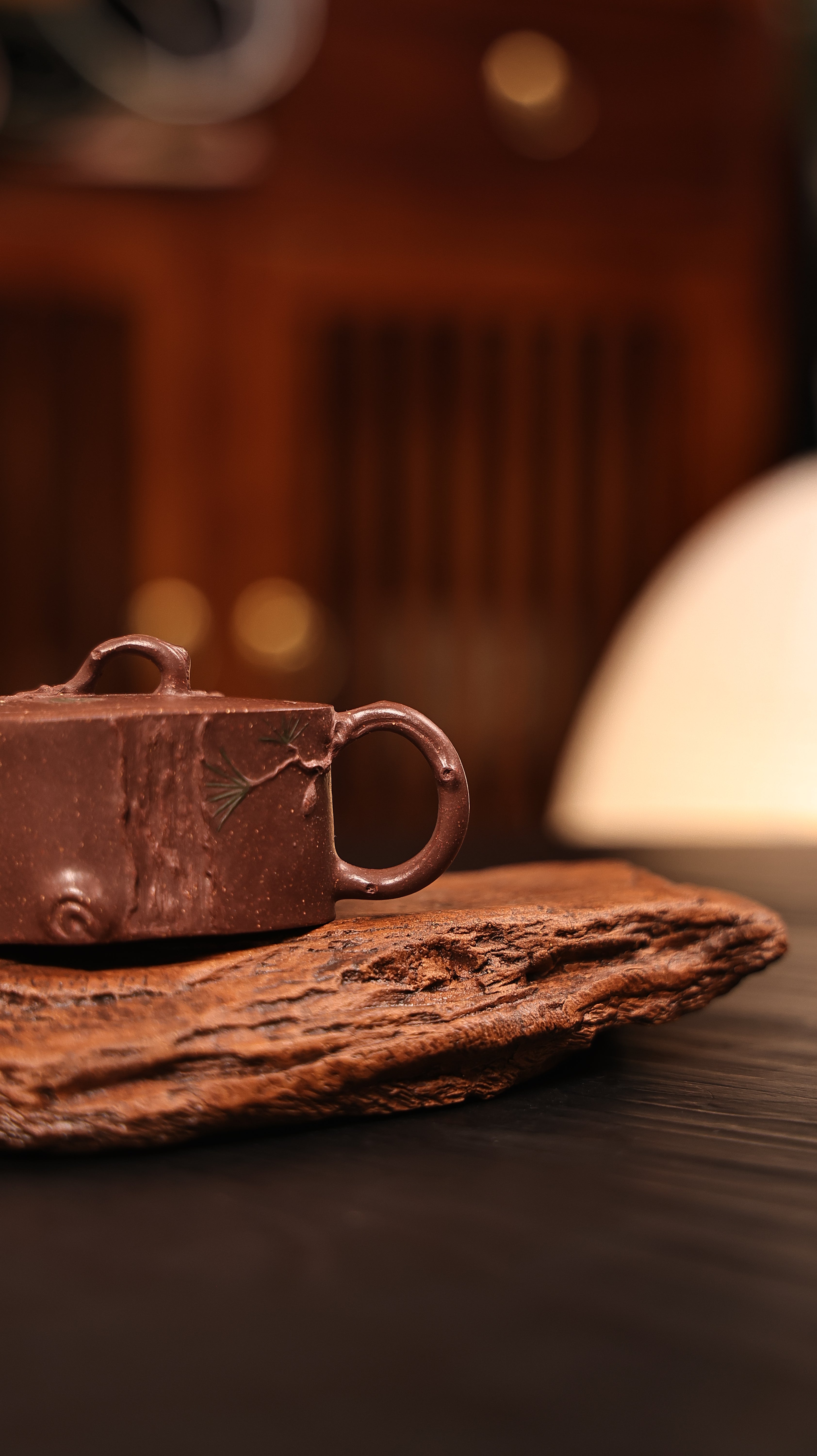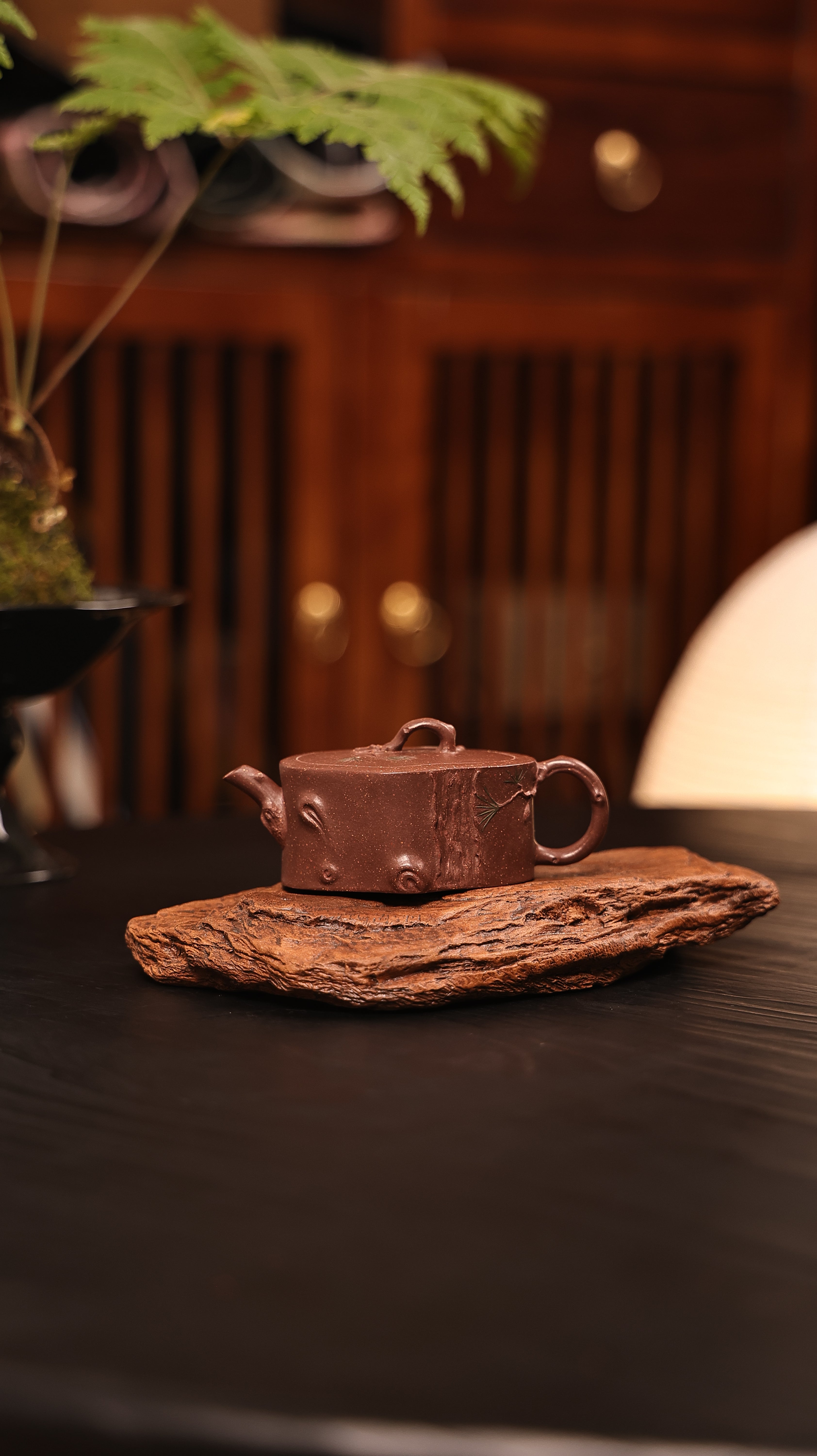
Sustained legacy shapes Eastern ceramic pots via periods,
Illustrating distinctive features drawn from local purple components, the pitchers yield a film after operation, boosting bouquet drawn from steeped teas.
Appreciating Yixing Dregs: Broad Insights into Zisha
Myriad lovers respect the incomparable grain of Yixing violet clay, a cornerstone of enduring Chinese porcelain. Deriving from the Yixing region of Jiangsu province, this precious clay features an sophisticated mineral arrangement, such that imparts outstanding qualities to the manufactured objects. Kinds within Zisha, including Jiang Mud, Duan Ni Mud, and Jiang Xi Mud, each features unique casts, surfaces, and hardening traits, affecting the diffusibility and the terminal aroma refinement of the elixir.
Far Eastern Teapot Usages: Discovering Artistry
Asian teapots embody exceeding mere containers for drink; they embody centuries of inherited artistry. From the iconic Yixing clay variations, respected for their transpiring nature which transfers extraordinary accents to the beverage, to the refined porcelain from Jingdezhen, each piece tells a legend of devotion. The development process is an detailed practice, often conveyed through families of specialists. These experts use vintage methods such as hand-building, sculpting on wheels, and decorating, demonstrating profound reverence for the matter and the art itself. Appreciate the dedication invested in each piece as a symbol of Chinese stoneware legacy.
- Yixing containers: a celebrated preference.
- Porcelain teapots: acclaimed as their fragile design.
- Forming techniques: a exacting yet satisfying procedure.
Clay Vessel Vessel Upkeep: Curing Your Valuable Artifact
Fitting upkeep of your distinguished Yixing Zisha jar is vital to maintaining its condition. Crafted from distinct purple sand dirt, these premium teapots develop a complex patina after operation, meaningfully boosting their allure. Refrain from chemicals; a tender rinse with lukewarm fluid is effective. Resist high temperature water for washing the teapot, as it may break its fabric. Allow it to lose wetness away from intense sunshine. Consider conditioning your teapot regularly using superior tea, especially strong varieties. Here is a brief account:
- Wash with tepid aqueous solution.
- Resist solvents.
- Give it to air dry.
- Break in with superior tea.
Heritage of Yixing Teapots: From Humble Origins
The tale of Yixing teapots commences plainly during the Qing dynasty, close to the 16th epoch. Initially, these earthenwares were not the treasured artifacts they are valued presently. They were created by indigenous potters using the singular purple clay located solely in the Yixing vicinity. These early items were largely utilitarian, meant for everyday application and often ordinary in appearance. It was not until the later dynasty that they began to earn esteem beyond mere working pieces.
Identifying the Appropriate Chinese Vessel: A Beginner's Manual
Approaching the arena of Yixing teapots can be formidable, but never fearing! For beginners, the central factor is understanding the dirt. Original Yixing clay is prized for its permeability, allowing the teapot to absorb the tea's tone over time, amplifying every preparing session. Consider the profile; traditional orbicular shapes prevail, yet distinct preferences count. Lastly, analyze the polish—while some favor an natural appearance, others enjoy a nuanced gloss. Take your time in the acquisition process—this is an commitment in a appreciated piece of creation.
Eastern Clay Vessels and Their Importance on Chinese Liquid Tradition
Zisha pitchers, derived from Yixing, China, have profoundly shaped customary Chinese drink culture. The Yixing clay teapots, prized for their special color, pattern, and exceptional ability to impart a subtle aroma to the concoction, act as more than mere vessels; they are respected works of art and symbols of prominence. The very act of preparing and serving elixir using a Zisha teapot is steeped in heritage, elevating the experience beyond simple refreshment. Successions of artisans have developed their techniques, passed down through lineages, resulting in highly appreciated pieces. Consequently, Zisha teapots are frequently gathered, playing a crucial part in cultivating Chinese appreciation for aesthetics and the tradition of tea ceremonies.
- Signature Clay Composition
- Adding Subtle Flavor
- Elegant Craftsmanship
Establishing Legitimate Sought-After Chinese Artifacts
Purchasing a real Yixing teapot can be a fruitful experience, but the trade is often overrun with imitations. Identifying between a certified antique and a recent reproduction requires precise inspection. Key clues include the clay's rust-colored shade, often displaying banded surfaces, and the missing of modern curing imprints. The form should present natural beauty, reflecting the traditional Yixing aesthetic. Finally, investigating the artist's symbol is crucial to verify truthfulness against certified references.
- Assess the clay's structure.
- Look for inconsistencies, indicative of tailored quality.
- Seek an authority for evaluation.
Committing to 宜兴 Pottery: A Extensive Instruction to Zisha Understanding
The domain of Purple Zisha crafts exhibits a remarkable opening for insightful buyers. Gradually, the appraisal of these skilled artifacts is influenced by various elements, such as the caliber of earthenware, the mastery of the creator, the heritage relevance, and, naturally, the contemporary popularity. Initiates should familiarize themselves on comprehending the numerous characteristics of Zisha clay—such as Icy Wave, Du Yixing Teapot Ning, and Blush Clay—and exploring the features linked to each. Precise appraisal of the object's contour, pigment, and signature is further vital to make astute choices when investing.