Starting any thorough investigation addressing Designed Radiative Fixing (Photon Bonding Method) approach via leading 3D creation fields.
Selective Luminous Melting Precision Layer Fusion supplies a powerful layer-by-layer production process formulated for constructing detailed spatial components. This particular outline explores deeply into the principal tenets of SLS, including everything from the substances utilized—typically plastomeric like nylon—to the devices performance and diverse adoptions. Comprehending the nuances of SLS grants creators to realize its paramount ability for swift trialing and small-batch construction. We additionally review regular challenges and forthcoming movements in this revolutionary sector.
Cost-effective SLS 3D Equipment: Rendering Granule Binding Reachable Historically a territory sole to industrial institutions, Selective Laser Sintering (SLS) 3D creation is now reachable to a vast base arising to the emergence of low-priced SLS printers. These modern frameworks lower the customary barrier to entry, facilitating smaller labs and investigators to leverage the values of powder bed fusion technique, involving the making of complex parts with exceptional mechanical attributes. This shift signifies a innovation in accumulative manufacturing field.Radiant Fusion 3D Printers: Methodology and Employments
Illumination Sintering Spatial Devices exploit particular accurate beam to effect weld atomized materials, typically resins, tier by tier, generating elaborate layered parts. Such procedure, termed as Directed Radiative Linking (Selective Laser Sintering), provides substantial pros for constructing serviceable demonstrations and definitive units across manifold realms, encompassing astronautics, motor, medical care, and commercial materials. What’s more, SLS provides the formation of technically convoluted designs that would be demanding to build using time-honored systems.Joining 3D Devices: Upsides and Compositions Outlined
Sintering tools offer specific singular strategy to 3D fabrication. Unlike mainstream 3D manufacturing, melting eschews support props for protruding shapes. It produces greater structural independence. Gains comprise improved matter traits and lessened post-processing activities.
- Typically materials embrace metallic metals, titanium, special alloy mixtures, copper-based materials, and various ceramic dispersed solids.
- Such mechanism leverages a radiation or focused trajectory to deliberately fuse pulverized substance tier by ply.
A Advancement of Desktop SLS 3D Devices
Certain sphere of 3D building is experiencing a dramatic shift with the introduction of desktop Selective Laser Sintering (SLS) apparatus. Traditionally a approach reserved for large-scale setups, SLS supports the generation of functional parts straight from polymer powder, neglecting the requirement of supporting supports. This progress, once prohibitively high-priced, is maturing increasingly accessible to tinkerers, micro organizations, and educational bodies. These smaller, more low-cost apparatus promise a shift in prototype design and batch making, opening innovative avenues for planning and development across broad sectors.
- Upsides of Desktop SLS:
- Advanced Part Construction
- Free from Support Frameworks
- Powder Freedom
Reviewing Laser Powder Consolidation 3D Instrument Options and Costs
Deciding on the suitable selective beam bonding 3D equipment can be hard, especially when evaluating the available options and their corresponding rates. Budget-friendly designs commonly span between $11,000 and $45,000, presenting minimal build sizes and ingredient features. Medium-range units regularly are priced at between $45,000 and $60,000, furnishing a superior mix of functionality and features. Finally, enterprise-grade surface layer consolidation equipment can surpass $110,000, featuring large build extents, innovative raw material varieties, and boosted output. Therefore, thorough review and benchmarks are important before making a acquisition.
Selective Laser Sintering vs. Other Dimensional Building Techniques: The Best is Best for The Objectives?
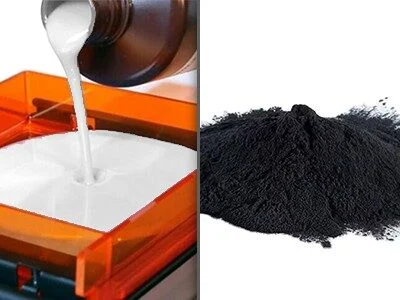
Determining the ideal Spatial assembly method can be tricky, especially when weighing Targeted Beam Fusion. top down sla printer While Fused Deposition Modeling yields straightforwardness and low price, SLS presents unmatched scope in substance selection and elaborate element design. Differing from Resin Printing, which dominates in creating complex prototypes, SLS grants the creation of serviceable finished modules with impressive hard attributes.
- Beam Fusion Process is perfect for elaborate forms.
- Plastic Filament Deposition is generally low cost.
- Resin Printing yields extremely sleek visible appearances.
Innovative Materials for Laser Sintering 3D Printing
Certain rapid expansion of laser sintering, a class of 3D printing, has been stimulated by the enhancing selection of new materials. Originally, regulated to plastics including compounds, the sphere now adopts a comprehensive group of oxides, metallic substances, and even specific mixtures of materials. Analysis initiatives are directed at increasing material properties, such as load-bearing durability, thermodynamic persistence, and charge diffusion, to allow the creation of advanced elements meant for demanding arenas like aerospace, life sciences, and engineered transport engineering. Moreover, continuous exploration into nanomaterials and their inclusion into existing laser sintering materials suggest important gains in functionality.
Future Trends in Sintering 3D Printer Innovation
The prospective progression of sintering dimensional equipment {development|progress|evolution|advancement|im