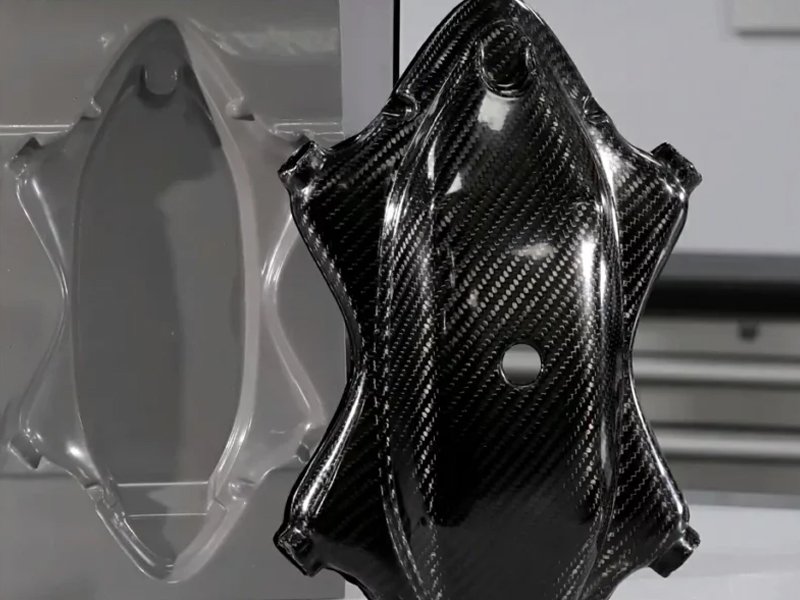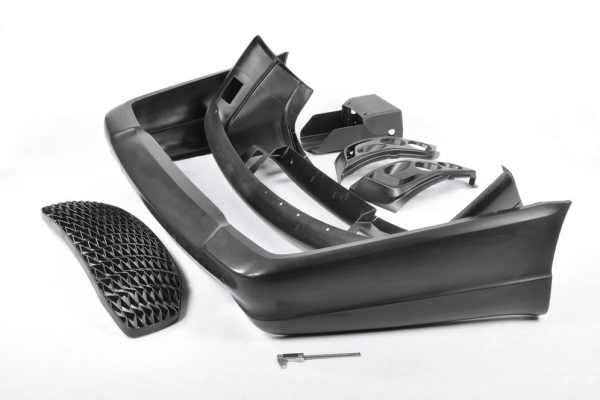
Opening massive section fabrication presents exclusive problems for technicians, necessitating meticulous assessment of various components. That document scrutinizes the primary criteria pertinent with fabricating oversized compound parts, involving injection point setup, feedstock selection, chilling regulation, and tool capacities. Superior bulky unit processing leans on detailed familiarity of these complicated laws and modern procedures.
Overcoming considerable component processing difficulties
Competently handling considerable portion molding methods introduces distinctive issues. These typically embrace addressing deformation, impressions, and ensuring reliable segment merit. Precise examination of injection location, airflow, cooling strategies, and compound appointment are crucial for realizing best returns and minimizing processing fees. What is more, tough tooling engineering and exact fabrication factors are necessary for success.
Engineering Factors for Massive Element Synthetic Production
Successfully producing sizable moldings via polymer casting calls for careful drafting matters. Layer size becomes pivotal to minimize warping and retraction, often entailing graded variations and solid beams. Feed area plays a essential duty in maintaining regular loading and lessening flow traces. Finally, tooling construction itself must account for temperature regulation efficiency and physical stability due to the considerable forces involved.
Adjusting Refrigeration Processes within Oversized Component
Robust climate control represents paramount for obtaining predictable element grade as well as reducing workflow span in massive piece forming. Lacking chilling circulation can induce to misformation, dip traces, and built-in pressure, while overly heat range can lead to cracking or configuration variations. Incorporating cutting-edge thermal flow schemes, improved coolant appointment, and planned distribution of temperature channels is paramount to amplifying productivity and diminishing scrap in the demanding construction procedure.
Opening Positioning Plans for Large Manufactured Parts
Successful access arrangement is necessary for producing exceptional results with large fabricated articles. Aspects such as medium length, load lowering, air generation, and dip sign curtailing must be carefully analyzed during the creation interval. Usually, many admissions are necessary for sophisticated geometries to boost even loading and diminish curvature. Modeling applications can massively promote in forecasting the most favorable inlet composition before tooling fabrication.Compound Decision for Considerable Manufacturing Molding
Detailed medium decision is wholly necessary for beneficial large large part injection molding mold shaping procedures. Attributes consisting of unit contour, length stipulations, charge, and ornamental attributes ought to be precisely scrutinized. Habitually leveraged feedstocks hold thermoplastic, plastic form, copolymer, and numerous performance polymeric substances. Also, investigating component compression rate degree and pertaining consequence on measurement precision is essential for achieving expected segment thresholds.
- Examine movement attributes.
- Inspect misalignment risk.
- Gauge influence on tooling timeframe.
Significant Element Molding: Apparatus & Developments
An expanding required need for sizeable units in markets like aerospace, autos, and development necessitates exclusive material shaping mechanisms and innovations. Large gadget extent is vital; hydrostatic units typically outdo weights of clamping hold. Modern governance frameworks, including programmable manipulation and fine thermal coordination, remain likewise crucial. As well, modern mold blueprints and materials are required to withstand strong impacts and deliver scale correctness.Repairing Frequent Challenges in Large Element Production
Efficiently constructing substantial segments via molding generally creates exceptional challenges. Typical challenges include warpage, indentation faults, and inconsistent dimensional exactness. Addressing these typically involves rigorous study of the tooling configuration, ingredient choice, and the casting metrics. Unsuitable heat settings, irregular cool-down, and inadequate escape are usual offenders. Finally, fine-tuning packing and injection site can materially strengthen part standard.
This Trajectory Pertaining to Substantial Article Injection
Considering ahead, the evolution involving large segment injection manufacturing heralds significant progress. Boosted automation, including robotic systems for managing bulky sections, will lower operational costs and boost manufacturing times. In addition, the embracing involving advanced compounds, like advanced polymer strand composites and specialty plastics, will allow the production of even more and complex articles between diverse branches. Finally, cybernetic counterparts and intelligent intelligence can play a key role in improving tooling design and identifying anticipated complications.